
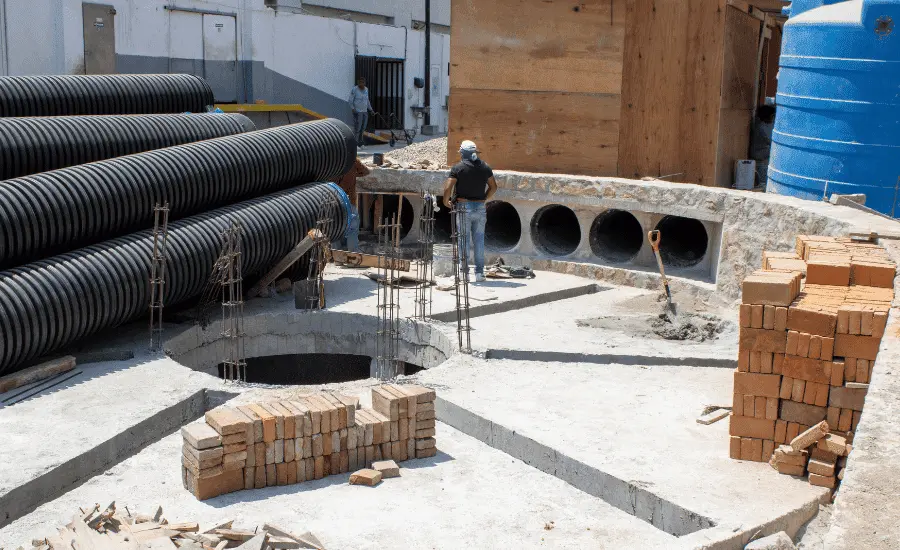
Construction projects involve the movement of large quantities of materials, tools, equipment, and other resources between warehouses, suppliers, and project sites.
Keeping track of these resources manually can become challenging, especially when multiple projects are running at the same time. Materials may be transferred between locations, equipment may be returned, and inventory records need to stay updated throughout the project.
Katmatic RFID solutions can help construction businesses improve visibility over materials, inventory, equipment, workforce access, and resources across construction projects.
What Is RFID in Construction?
RFID, or Radio Frequency Identification, allows physical items to be identified using RFID tags and readers.
Construction materials, tools, equipment, and other assets can be assigned RFID tags. RFID readers can then identify these tagged items when they move through designated areas.
A construction tracking process can look like:
Warehouse → Project Site → Construction Activity → Transfer → Return
This creates a digital record of resource movement and can reduce the need for entirely manual inventory tracking.
Construction Inventory Management
Construction projects require many different types of materials, from raw construction materials to tools, equipment, safety items, and project-specific resources.
Knowing what is available at each project site is important for planning and procurement.
Katmatic RFID can help businesses track tagged inventory as materials enter, leave, or move between storage locations.
This can provide better visibility into:
- Available materials
- Materials issued to projects
- Materials transferred between sites
- Returned materials
- Tools and equipment
- Project inventory
- Stock movement
Instead of relying only on manual records, businesses can use RFID data to support their inventory management process.
Tracking Materials From Warehouse to Project Site
Materials often move from a central warehouse to different construction sites.
Without a proper tracking system, it can become difficult to maintain accurate records of which materials were sent to which project.
RFID can help businesses record material movement at important points.
For example:
Warehouse → Material Issued → Vehicle Loading → Project Site → Material Received
RFID readers can identify tagged materials during these processes, helping businesses maintain a digital record of movement.
This can also make it easier to compare the materials expected at a project site with the materials actually received.
Managing Material Returns
Not every material sent to a construction site is necessarily consumed.
Unused materials, reusable equipment, tools, and other resources may need to be returned to a warehouse or transferred to another project.
Tracking these returns manually can make inventory reconciliation difficult.
RFID can help businesses record when tagged materials and assets return from a project site.
For example:
Project Site → Return Process → RFID Identification → Warehouse → Inventory Update
This can help businesses maintain better visibility over reusable materials and reduce uncertainty about where resources are located.
Tracking Tools and Equipment
Construction companies often manage valuable tools and equipment across multiple sites.
When equipment moves between projects, businesses need to know where it was assigned and when it was returned.
RFID can provide a unique digital identity for tagged equipment and help monitor its movement.
This can support tracking of:
- Construction tools
- Machinery
- Equipment
- Safety equipment
- Reusable assets
- Project resources
Businesses can then maintain records of which assets are assigned to particular projects or locations.
Managing Resources Across Multiple Projects
Construction companies may operate several projects at the same time.
Resources can move between project sites depending on project requirements.
A centralized RFID tracking system can provide businesses with better visibility across these locations.
For example:
Central Warehouse → Project A
Central Warehouse → Project B
Central Warehouse → Project C
When resources are transferred, RFID records can help update the movement and assignment of those assets.
This can make it easier for project managers and inventory teams to understand where resources are being used.
Workforce and Hiring Management
Construction projects also involve managing workers across different sites and work schedules.
RFID-enabled identification can be used as part of employee or worker access and attendance systems.
When workers enter or leave a designated project site, RFID can record the relevant access or attendance event.
This can support:
- Worker attendance
- Site access logging
- Shift management
- Working hour records
- Project-based workforce tracking
For hiring and workforce management, RFID can complement HR and payroll systems by providing digital attendance information.
Construction Site Access Tracking
Construction sites can contain valuable equipment, materials, and restricted areas.
RFID-based identification can help businesses maintain access records for employees, contractors, and other authorized personnel.
Depending on the implementation, RFID readers can be installed at site entrances or other controlled access points.
This can provide information about who entered or exited a designated area and when the event occurred.
Access tracking should always be implemented according to the organization’s security, privacy, and workforce policies.
Construction Inventory Auditing
Regular inventory checks are important for construction companies.
Manual stocktaking can become difficult when materials and equipment are distributed across multiple project sites.
RFID can support faster inventory identification by allowing multiple tagged items to be detected using RFID readers.
Handheld RFID readers can also be used for inventory checks across warehouses and project locations.
This can help businesses compare:
Physical Inventory → RFID Records → System Inventory
The result can be a more organized approach to construction inventory auditing.
Katmatic RFID for Construction Operations
Katmatic develops RFID solutions based on the specific workflow of each construction business.
A construction RFID system can combine RFID tags, fixed readers, handheld readers, access points, inventory software, and reporting tools.
Depending on the project, Katmatic can design solutions for:
- Construction material tracking
- Warehouse inventory
- Project site inventory
- Equipment tracking
- Tool tracking
- Material returns
- Employee attendance
- Site access
- Resource transfers
- Inventory auditing
The solution can also be connected with existing business or inventory management systems where required.
Why Construction Businesses Can Use RFID
RFID can help construction businesses improve visibility over resources that frequently move between warehouses and project sites.
It can support:
Better Material Visibility
Know what materials have been issued, received, transferred, or returned.
Improved Equipment Tracking
Maintain records of tools and equipment across different projects.
Simplified Inventory Auditing
Use RFID readers to support faster inventory checks.
Better Resource Management
Track resources assigned to different construction projects.
Digital Movement Records
Maintain a record of important material and asset movements.
Workforce Tracking
Support employee attendance and site access management.
Customized RFID Solutions by Katmatic
Every construction company has different project structures, inventory processes, and resource requirements.
Katmatic can design RFID systems around the existing workflow of the business.
A solution can include:
- RFID tags
- UHF RFID readers
- Handheld RFID readers
- RFID antennas
- Site access readers
- Inventory management software
- Attendance systems
- Automated alerts
- Reports and dashboards
- Business software integration
The system can be designed for a single construction site or expanded across multiple projects and warehouses.
Simplifying Construction Resource Management With RFID
Construction businesses need to manage materials, equipment, tools, workers, and other resources across constantly changing project environments.
RFID can help connect these physical resources with digital records, providing better visibility into where assets are located and how they move between projects.
With Katmatic RFID solutions, construction companies can build a more organized approach to inventory tracking, material returns, equipment management, workforce access, and resource monitoring.
Looking to improve construction inventory and resource tracking? Katmatic can design an RFID solution around your construction projects and operational requirements.