
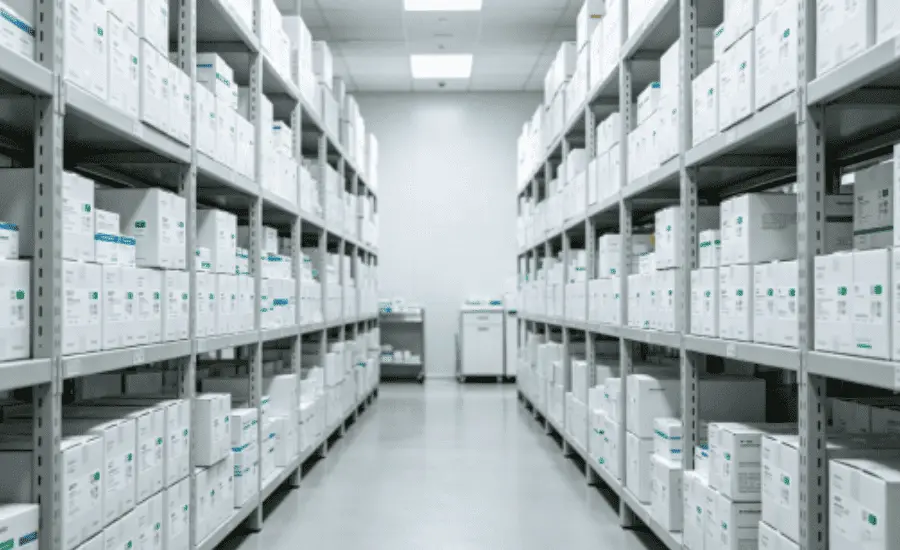
The pharmaceutical industry depends on accurate inventory, reliable product identification, and timely access to information. From receiving medicines and storing products to managing batches and expiry dates, pharmaceutical businesses need visibility across every stage of their inventory.
As pharmaceutical operations grow, managing these activities manually can become increasingly difficult.
Katmatic’s Smart RFID Tracking provides a technology-driven approach to pharmaceutical inventory management by using RFID technology to identify and track physical products and inventory.
With RFID tags, readers, antennas, and software working together, pharmaceutical businesses can create a more connected view of their inventory and product movement.
Why RFID Matters in the Pharma Industry
Pharmaceutical inventory can include products with different batches, expiry dates, quantities, and storage locations.
Traditional tracking methods may require employees to manually record or scan individual products. RFID provides another approach by allowing tagged products to be identified automatically when they pass through designated RFID-enabled areas.
Depending on the system design, RFID can support:
- Batch tracking
- Expiry date tracking
- Inventory management
- Product identification
- Warehouse movement
- Receiving and dispatch
- Stock auditing
- Product traceability
Katmatic designs RFID solutions around the specific workflow and requirements of each pharmaceutical operation.
Smart Batch Tracking with RFID
Batch information is an important part of pharmaceutical inventory management.
Different products can belong to different batches, making accurate identification and tracking essential for inventory operations.
With RFID, a product or inventory unit can be associated with its digital product record. When the RFID tag is detected, the system can retrieve the corresponding information from the database or connected business software.
This can provide visibility into:
- Product identification
- Batch number
- Current location
- Inventory status
- Movement history
- Receiving and dispatch records
The result is a digital connection between the physical pharmaceutical product and its associated information.
RFID Expiry Date Tracking
Managing expiry dates becomes increasingly challenging as inventory volumes increase.
Pharmaceutical warehouses may contain products with different expiry dates stored across multiple locations. Connecting physical inventory with digital expiry information can make this information easier to access.
Katmatic’s RFID approach can associate tagged products with records containing relevant information such as expiry dates, batch numbers, product details, and locations.
This allows businesses to retrieve expiry information through their inventory or business management system when RFID-tagged products are identified.
RFID does not replace pharmaceutical expiry-management procedures, but it can provide an automated identification layer to support them.
Pharmaceutical Inventory Management with RFID
Inventory visibility is one of the key applications of RFID.
A pharmaceutical RFID system can track tagged products as they move through different stages of the inventory process.
For example:
Receiving → Storage → Inventory → Picking → Dispatch
RFID readers positioned at appropriate locations can identify tagged products as they move through these stages.
The captured information can then be recorded in the RFID software or integrated business system.
This creates a clearer digital record of inventory movement and can reduce dependence on repetitive manual identification.
Automating Pharmaceutical Warehouse Tracking
Pharmaceutical warehouses involve continuous movement of products between receiving areas, storage locations, picking areas, and dispatch points.
RFID can help automate identification at these locations.
Depending on the warehouse layout, RFID readers can be installed at:
- Receiving points
- Warehouse entrances
- Storage areas
- Transfer points
- Picking zones
- Dispatch areas
- Inventory audit locations
When tagged products pass through these areas, the RFID system can capture their identification and record the relevant event.
Faster Inventory Auditing
Regular stock audits are an important part of inventory management.
Manually checking large quantities of pharmaceutical products can require significant time and resources.
RFID can support faster identification of tagged products because RFID systems can identify multiple tags within a reading zone without requiring individual line-of-sight scanning.
The actual performance depends on factors such as RFID tag selection, product packaging, reader configuration, antenna placement, and the physical environment.
When properly designed, RFID can make inventory identification and auditing more efficient.
Pharmaceutical Product Traceability
Pharmaceutical businesses need to understand how products move through their operations.
RFID can provide a digital record of identification events as tagged products move through defined tracking points.
A system can be designed around a workflow such as:
Receiving → Storage → Internal Movement → Distribution
Each RFID event can be associated with the corresponding product record, creating a history of identified movements.
This can help businesses gain greater visibility into the movement of their pharmaceutical inventory.
Connecting RFID with Existing Systems
RFID does not have to operate separately from existing pharmaceutical software.
Katmatic can integrate RFID tracking with existing inventory management systems, ERP platforms, or other business applications where required.
A typical architecture can include:
RFID Tags → RFID Readers → Antennas → RFID Software → Database → ERP/Business System
This allows information captured from the physical environment to become part of the organization’s existing digital workflow.
For example, an RFID reader can identify a product while the connected system retrieves information such as its product details, batch, expiry date, or inventory status.
How Katmatic Builds Smart RFID Solutions
Katmatic focuses on understanding the physical movement of products before designing the RFID system.
The implementation can consider:
- Product type
- Packaging material
- RFID tag requirements
- Reading distance
- Warehouse layout
- Reader placement
- Antenna positioning
- Tracking points
- Software integration
- Inventory workflow
This approach is important because RFID performance can vary significantly depending on the physical environment.
A pharmaceutical RFID solution should therefore be designed around the actual products and processes being tracked.
RFID for the Pharma Industry in Nepal
Nepal’s pharmaceutical sector includes manufacturers, distributors, warehouses, pharmacies, and other organizations involved in the movement and management of pharmaceutical products.
As these operations handle increasing amounts of inventory, digital tracking can provide a way to connect physical products with their information systems.
Katmatic’s RFID solutions can support pharmaceutical businesses that need to improve visibility across inventory, batches, expiry information, warehouse movement, and product tracking.
Rather than replacing existing processes entirely, RFID can be introduced at specific points where automated identification provides practical value.
Build Your Smart RFID System with Katmatic
Smart pharmaceutical tracking starts with accurate identification and reliable inventory information.
Katmatic combines RFID hardware, software, and system integration to develop tracking solutions around real pharmaceutical workflows.
From batch and expiry tracking to inventory management, warehouse automation, and product movement, RFID can help pharmaceutical businesses create a more connected approach to inventory visibility.
If your pharmaceutical operation needs a customized RFID tracking system, Katmatic can design the solution around your products, facilities, and business requirements.
Katmatic — Process Simplified.