
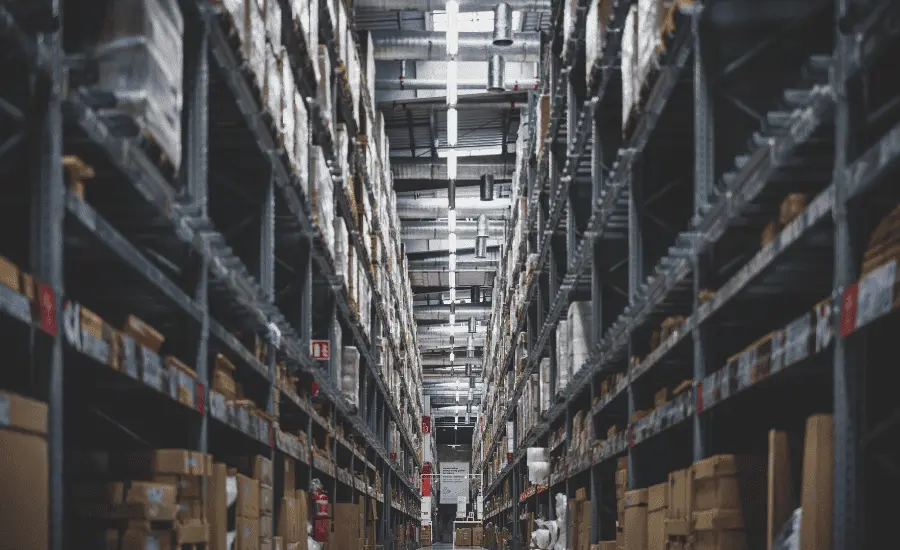
Manufacturing involves the continuous movement of raw materials, work-in-progress items, finished products, tools, and inventory. As production grows, manually tracking these movements can become increasingly difficult.
For manufacturers in Nepal, having clear visibility into where materials are, what stage production has reached, and how inventory is moving can make a significant difference to daily operations.
This is where RFID technology can help.
Katmatic develops RFID-based tracking solutions that connect physical materials and products with digital information. By using RFID tags, readers, antennas, and software, businesses can automatically capture the movement of tagged items across defined locations and processes.
What Is RFID in Manufacturing?
RFID, or Radio Frequency Identification, uses radio waves to identify and track objects equipped with RFID tags.
Unlike traditional barcode systems, RFID does not always require direct line-of-sight scanning. Multiple tagged items can also be identified as they pass through an RFID-enabled area, depending on the tag, reader, environment, and system configuration.
In manufacturing, RFID can be applied to:
- Raw material tracking
- Work-in-progress tracking
- Finished goods tracking
- Inventory movement
- Warehouse management
- Material consumption
- Production-stage monitoring
Katmatic designs these systems according to the physical workflow and tracking requirements of each business.
RFID Work-in-Progress Tracking
Work-in-progress can move through several stages before becoming a finished product. When these movements are recorded manually, maintaining an accurate view of production status can be challenging.
An RFID-based WIP tracking system can associate RFID tags with materials, products, containers, or other trackable units.
As tagged items move through RFID-enabled checkpoints, the system can capture their movement and update the corresponding digital records.
This can provide manufacturers with greater visibility into:
- Current production stage
- Material movement
- Production flow
- Item location
- Processing history
- Movement between production areas
The objective is simple: connect physical movement on the manufacturing floor with digital tracking information.
How Katmatic Uses RFID on the Manufacturing Floor
Katmatic implemented an RFID-based work-in-progress tracking solution for Tricot Industries of Golyan Group in Biratnagar.
The system was designed to track material movement across the manufacturing floor, from initial fiber allocation through the production process to final packaging.
By capturing material movement at different stages, the system provides greater visibility into production flow and helps identify areas where movement or processing may create bottlenecks.
This implementation demonstrates how RFID can become part of the broader manufacturing workflow rather than being limited to basic inventory counting.
RFID for Raw Material Tracking
Raw materials are constantly received, stored, issued, consumed, and transferred during manufacturing.
Without an appropriate tracking system, businesses may need to depend heavily on manual records to understand material movement.
RFID can provide a digital connection between physical materials and their associated records.
Depending on the implementation, manufacturers can use RFID to track:
Receiving → Storage → Production → Processing → Finished Goods
This creates a more traceable flow of material throughout the operation.
RFID Inventory Management
Inventory accuracy is an important part of manufacturing management.
RFID can help automate the identification of tagged inventory as items move through warehouses, storage areas, production facilities, and designated checkpoints.
Instead of relying entirely on manual counting, RFID-enabled inventory systems can capture item information electronically.
Katmatic can develop RFID inventory solutions for:
- Manufacturing warehouses
- Distribution centers
- Production facilities
- Storage areas
- Finished goods warehouses
- Asset-intensive operations
The exact system architecture depends on the type of inventory, environment, tag requirements, reading distance, and business workflow.
RFID Warehouse Automation
RFID can also be used to automate warehouse entry and exit processes.
A practical example is Katmatic’s RFID implementation at the UN Logistics Base in Simara, Nepal, where UHF RFID infrastructure was deployed for inventory and shipment tracking.
The system supports automated identification of inbound and outbound shipments, gate-level scanning, and rapid stock auditing across 30,000+ defense and logistics items.
This demonstrates how UHF RFID can be used when organizations need to track large inventories and automate physical movement records.
RFID Beyond Manufacturing
The same RFID principles can be applied to other industries where organizations need visibility over physical assets and inventory.
For example, Katmatic implemented chain-of-custody tracking for Cashmere Stories in Germany, helping manage high-value luxury cashmere inventory across different event locations.
The solution included RFID-based tracking and integration with a third-party ERP system, allowing inventory information to remain connected across locations.
This demonstrates another important application of RFID: maintaining visibility of physical inventory as it moves between locations.
Why RFID Can Be Useful for Nepalese Manufacturers
Manufacturing environments often involve repetitive movement of materials across multiple locations.
RFID can help businesses replace some manual tracking activities with automated identification.
Depending on the implementation, this can provide:
- Better inventory visibility
- Automated movement records
- Faster stock auditing
- Work-in-progress visibility
- Improved material traceability
- Reduced manual data entry
- Digital production movement records
- Integration with existing business software
However, RFID is not simply a matter of installing readers and tags. Successful implementation requires understanding the actual manufacturing environment.
Metal surfaces, liquids, tag placement, reader positioning, reading zones, and production processes can all affect RFID performance.
How Katmatic Implements RFID Solutions
Katmatic approaches RFID projects around the actual movement of materials and assets.
The process typically begins by understanding the existing workflow and identifying where RFID can provide meaningful automation or visibility.
The solution can then include:
RFID Tags → RFID Readers → Antennas → Tracking Software → Database → Business System
Depending on the requirement, Katmatic can integrate RFID tracking with existing software and ERP systems so that RFID data becomes part of the organization’s broader operational workflow.
RFID Solutions Designed Around Your Manufacturing Process
Every manufacturing facility has different processes, layouts, materials, and operational requirements.
A solution designed for a textile manufacturer may not be appropriate for a pharmaceutical facility, warehouse, or metal-intensive production environment.
Katmatic therefore develops custom RFID solutions based on the specific tracking requirements of each organization.
From raw material movement and WIP tracking to inventory management and warehouse automation, RFID can provide a digital layer of visibility across physical operations.
Build Your RFID Manufacturing Solution with Katmatic
Manufacturing becomes easier to manage when businesses can see how materials and products move through their operations.
With experience across manufacturing, warehouse automation, inventory tracking, and chain-of-custody applications, Katmatic develops RFID solutions designed around real operational requirements.
If your business needs to track raw materials, work in progress, finished goods, inventory, or physical assets, RFID can provide the foundation for a more connected tracking system.
Katmatic — Process Simplified.